
Ultrapure Water Benefits Patients on Dialysis
Ultrapure water is not only an essential reagent for laboratory research, but may also be beneficial for dialysis patients – according to the results from a new study. But what do you know about the quality of the water you’re using in your experiments?
People with kidney disease receiving dialysis are exposed to hundreds of litres of water every week. So, it’s possible that even tiny traces of bacteria and endotoxins could have detrimental effects.
In fact, the quality of their dialysis-water can contribute to inflammation – the natural defence the body takes on when it is under attack. Chronic inflammation is not good news for people with kidney disease. It is a potent trigger of cardiovascular disease and can also contribute to anaemia. All in all, it increases the chance of losing their lives.
A team of scientists at the University of Naples set out to investigate if using improved ultrapure water is a better choice for people receiving dialysis for kidney failure. In a small prospective study involving 32 patients, their results suggest that using an additional ultrafilter to improve dialysis-water quality may indeed have health benefits. (Reference: https://link.springer.com/article/10.1007%2Fs40620-017-0422-x ) Patients receiving this ultrapure water had improved haemoglobin levels and a reduction of inflammation markers in their blood. As a result, they were able to reduce their medication to treat their anaemia.
Although these results remain speculative, the researchers hope it will lead onto bigger studies to investigate whether using improved ultrapure water can reduce inflammation and improve survival for patients. With almost 150,000 people on dialysis in the Bangladesh alone, the impact could be huge.
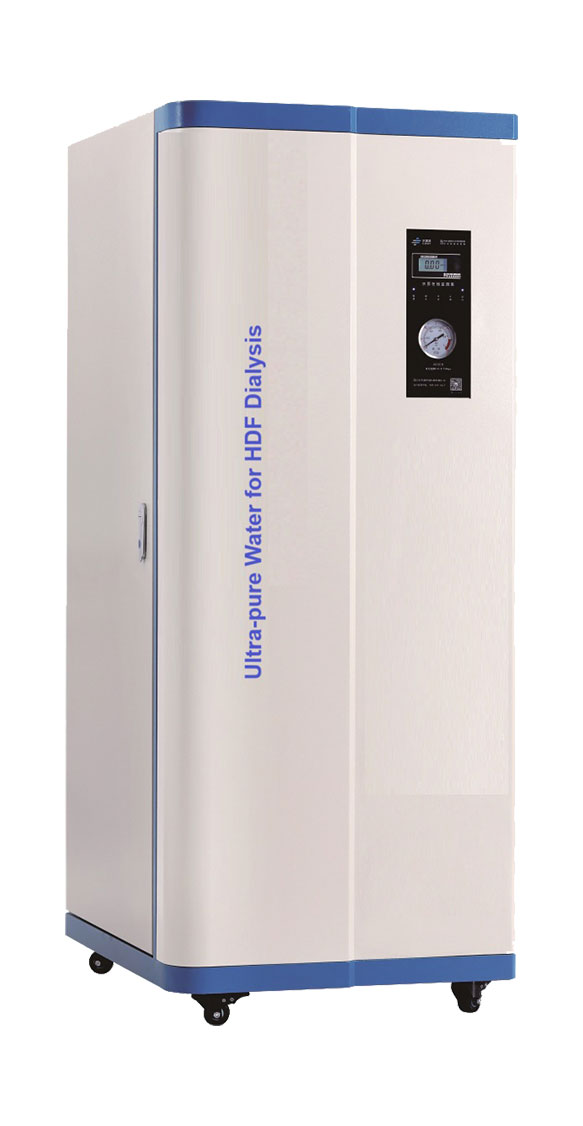
When Should I Use Ultrapure Water ?
We have an easy reference list of common applications and the water purity you need. Check out our handy categories:
- Ultrapure water (Type I) is endotoxin-free, with undetectable levels of nucleases and proteases. Use this for analytical techniques like High-Performance liquid chromatography (HPLC), molecular biology applications like single molecule polymerase chain reaction (PCR), or mammalian cell culture.
- Type II is for your general laboratory use, such as the preparation of media or buffers.
- Type III is good for everyday things like rinsing glassware and filling water baths.
Microbiological Standards for Water and Dialysis Fluid Purity
| Particulars | Standard Water | Standard Dialysate | Ultrapure Water | Ultrapure Dialysate | Sterile Dialysate |
|---|---|---|---|---|---|
| Bacterial limitsa, CFU/mL | < 100 | < 100 | < 0.1 | < 0.1 | < 10-6 |
| Endotoxin limitsb, EU/mL | < 0.25 | < 0.25 | < 0.03 | < 0.03 | < 0.03 |
aAdequate monitoring and microbiological technique (i.e. UPDF,poor media TGEA, R2A,17-23ºC,7 days)
bSensitive LAL assay, threshold detection limit , 0.03 EU/mL