
About Hemodialysis Water
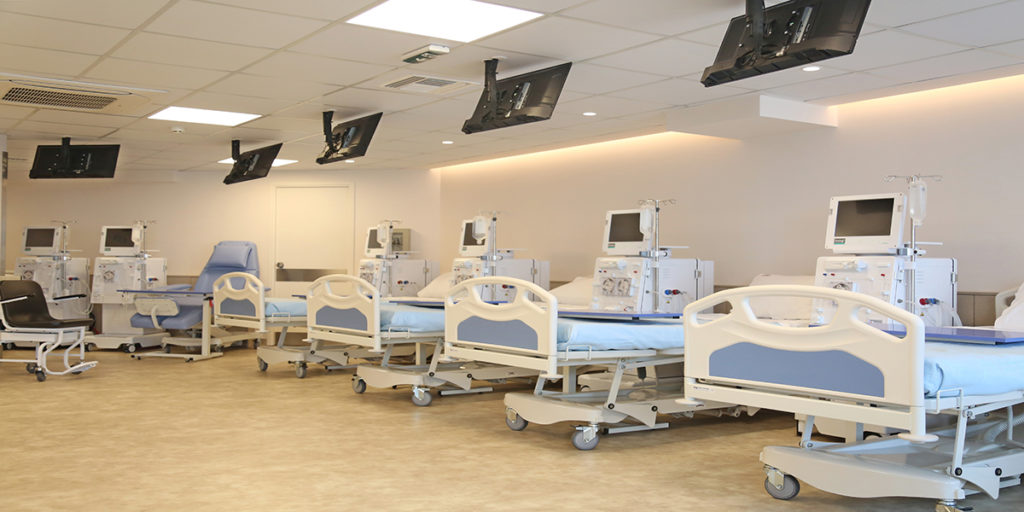
Water purity for dialysis is of critical importance for patient health and outcome, and in this regard, there are three major points to consider:
Hemodialysis (HD) patients are exposed to more than 400 Liters of water per week. Contrast this with a person with a normal kidney drinking less than 15 Liters of water per week.
The stomach acid and intestinal barrier protect from the ills of contaminated water more effectively than the barrier imposed by the dialyzer membrane.
The functioning kidney can further protect the normal individual from the contaminants of water by eliminating these, this protection being absent for the HD patient
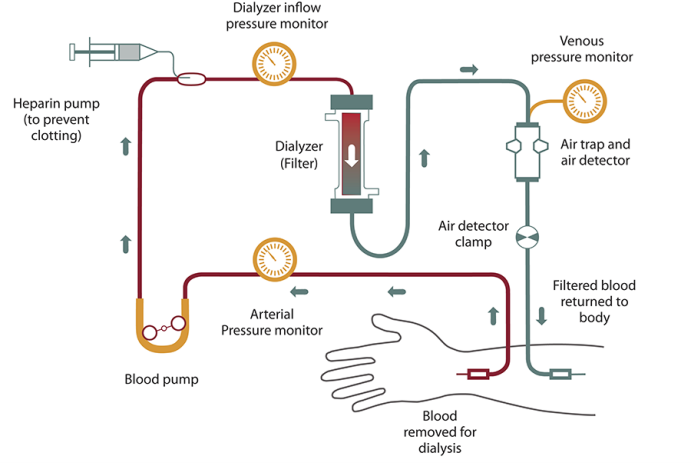
Water consumption for each bed is calculated at approximately 200 liters per dialysis.
Water Concerns
The contaminants can be divided into three major categories:
- Particulate Matter These cause turbidity and include clay, iron, sand, chalk, silica, etc.
- Chemicals These include dissolved inorganic ions and salts, such as Na, Cl, Al, Ca, Mg, and Fl. Organic matter includes industrial and agricultural toxins such as fertilizers, pesticides, and oils.
- Microorganisms and Endotoxins These include predominantly bacteria and occasionally fungi, viruses, protozoa, spores, and endotoxins produced by the organisms.
Water Solutions Ltd. mission is to reduce all contaminants from the raw water to the level that meets standards of The Association for the Advancement of Medical Instrumentation (AAMI).
| Contaminant | Toxic effect | Maximum concentration (mg/L) |
|---|---|---|
| Known to be toxic to dialysis patients | ||
| Aluminum | Encephalopathy, bone disease, anemia | <0.01 |
| Chloramines | Hemolysis, anemia, methemoglobinemia | <0.10 |
| Chlorine | Hemolysis | 0.5 |
| Copper | Hemolysis, fever, headache, hepatitis | <0.10 |
| Fluoride | Bone disease, osteomalacia | <0.20 |
| Nitrate | Cyanosis, methemoglobinemia, hypotension, nausea | <2.0 |
| Sulfate | Nausea, vomiting, acidosis | 100 |
| Zinc | Anemia, nausea, vomiting, fever | 0.1 |
| Normally present in dialysate | ||
| Calcium | Nausea, vomiting, weakness, headache, hypertension, malaise, cardiac problems | <2 (0.1 mEq/L) |
| Magnesium | Nausea, vomiting, weakness, headache, hypertension, malaise, cardiac problems | <4.0 (0.3 mEq/L) |
| Potassium | Muscle symptoms, bradyarrhythmia, death | 8 (0.2 mEq/L) |
| Sodium | Hypertension, pulmonary edema, headache, thirst, confusion, seizure, coma | 70 (3.0 mEq/L) |
| Unsafe even in drinking water | ||
| Arsenic | Nausea, vomiting, diarrhea, hepatitis, polyneuropathy, skin lesions | 0.005 |
| Barium | Hypokalemia | 0.1 |
| Beryllium | Pulmonary granulomatous disease with cough, weight loss | 0.0004 |
| Cadmium | Bone disease, renal disease | 0.001 |
| Chromium | Carcinogen | 0.014 |
| Lead | Abdominal pain, neuropathy, nephropathy, encephalopathy, hypertension | 0.005 |
| Mercury | Tremors, gingivitis, psychiatric symptoms | 0.002 |
| Selenium | Nausea, vomiting, diarrhea | 0.01 |
| Silver | Vomiting, diarrhea, shock, coma, convulsions, death | 0.005 |
| Thallium | Neuropathy | 0.002 |
What is Endotoxin?
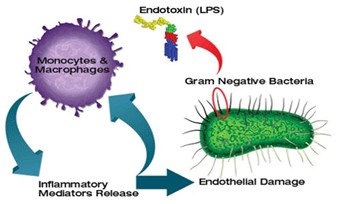
Viable bacteria and endotoxins in water sometimes cause problems for human health. Endotoxins are major components of the outer cell wall of gram-negative bacteria. in medical procedures, especially hemodialysis (HD) and related therapies HDF and HF, endotoxins in the water for hemodialysis can permeate through the hemodialysis membrane and cause microinflammation or various related illnesses. To decrease such a biological risk, RO and UF membranes are generally used. Also, hot water disinfection.
AAMI/JCI Recommends Components for the Water Purification Systems.
- Depth Filter (Multimedia Filter)
- Activated Carbon Filter-1
- Activated Carbon Filter-2
- Water Softener with brine tank
- Reveres Osmosis RO Unit 1st Stage
- De-Ionization Systems (Optional)
- Reveres Osmosis RO Unit 2nd Stage
- Ultra Violet UV Sterilizer
- Toxin Filter
Disinfection Systems.
Disinfection/Cleaning Process of Main RO Plant.
General Information:
- Manufacturer recommends that clean the RO machine after every 4 – 6 weeks (Manufacturer -recommendation attached – Page 147). A higher cleaning frequency is normally justifiable.
- Disinfection required frequency factors such as feed water quality and operation schedule and should therefore be determined by regular microbiological testing.
- Cleaning of the membrane elements is vital because contaminants can build up on the membrane element surface, reducing the permeate flow rate and affecting the quality of the permeate.
Procedure to Clean with a CIP (Clean-In-Place).
- With the machine running, open the CIP permeate valves, close the permeate service valve and fill the CIP tank with permeate water. When the container is filled to desired level, turn machine OFF.
- Add and mix up the cleaning agents in the CIP container. Please use PA (Polyamide) membrane element compatible cleaners. (Cleaning, Chemicals: 0.1% (W) NaOH, pH -13, 35°C max. – Page. No.139 – recommendation of RO Membrane manufacturer) Close the inlet feed water supply valve to the machine and open the CIP inlet feed water to the CIP container.
- Close the permeate valve to point of use and aiso the concentrate valve drain.
- Open the CIP valves, allowing permeate and concentrate to the return to the CIP container. When set a properly, the RO machine, the CIP pump and the CIP container should be assembled in a loop configuration to recirculate the water through the machine and back to the CIP container during cleaning. The size of the CIP container should be a minimum of three times the permeate rate.
With a machine set-up in the CIP configuration and the cleaning solution mixed in the container, we are now ready to start the CIP process as per below steps.
- Check and ensure that the feed water, permeate, and concentrate valves and line are open and unrestricted in the tank loop.
- After the process water is displaced, cleaning solution will be present in the concentrate stream. Then recycle the concentrate and permeate to the cleaning solution tank and allow the temperature to stabilize. Measure the ph of the solution and adjust the pH if needed.
- Start the CIP and RO machine pumps together. As they start up, observe all RO pressures and flows.
- Recycle the cleaning solution for about 15 minutes, shut down the RO and CIP pump and allow to the
elements to soak. Sometimes a soak period of about 60 minutes is sufficient.
- Recycle the cleaning solution for about 30 – 60 minutes. The high flowrate flushes out the foulants removed from the membrane surface by the cleaning.
- Flush-out. RO permeate water is recommended for flushing out the cleaning solution. for 15 – 20 minutes.
- After the flushing out, de-energize the machine. Then, open the inlet water line and route the concentrate and permeate lines to the drain.
- Start the RO machine and verify the permeate quality is good before returning to normal operation
Disinfection/Cleaning Process of the Distribution loop
- General – Disinfection of the distribution system should be performed on a routine basis to ensure consistent microbiological quality of the product water and to avoid the formation of a coating of organic matter on internal wet surfaces (biofilm). The system therefore has been designed to allow for simple chemical disinfection of the distribution loop system.
- Frequency -The required frequency of disinfection of the distribution loop varies from clinic/hospital, depending on local factors such as inlet water quality, temperature of the water and disinfection routines for the water treatment equipment. it should therefore be established by regular microbiological testing. Once a month should, however, be regarded as a minimum.
- Required equipment – Recirculating pump and storage tank.
Disinfection solutions:
| Disinfection solutions | Details |
|---|---|
| 1. Sodium hypochlorite (Bleach - NaOCl) |
Mixing instruction:
- 5% active chlorine in the conc. solution: mix one part with 9 parts of water. - 10% active chlorine in the conc. solution: mix one part with 19 parts of water.
Dwell time: Circulate the solution for minimum 60 minutes.
|
| 2. Peracetic acid (CH₃CO₃H) |
Mixing instructions:
- According to the instructions from the manufacturer of the disinfectant.
Dwell time: Circulate the solution for minimum 60 minutes.
|
| 3. Formaldehyde |
- Can be used for routine disinfection at a concentration of 4%. This corresponds to a dilution of 1:10 of a 37% formaldehyde solution (formalin).
Dwell time: Circulate the solution for 2 - 4 hours.
|
- Add and mix up the cleaning agents in the storage tank (According to instructions from the manufacturer of the disinfectant mentioned above)
- Open the recirculation valves, allowing cleaning agent recirculating through the distribution loop and return to the storage tank.
- Start the recirculating pump and observe all distribution loop pressures and flows. Recycle the cleaning solution for about 30 minutes. In case of heavy contamination, the circulation time should be extended.
- During circulation, open the connecting ports (taps) in the distribution loop one by one for a short moment to disinfect them, then close them again.
- When the circulation period is finished stop the pump. if desired, the cleaning agent can now be left in the distribution loop for a couple of hours.
- Open the drain valve of the storage tank and start the recirculating pump and flushing out till empty of the distribution loop and storage tank.
- After the flushing out, start the RO machine and open the permeate line valve to the storage tank.
- Re-start the recirculating pump and rinse to the drain at least 60 minutes. Verify the permeate quality is good before returning to normal operation.
- After permeate quality is verified as good, route the permeate to point of use. We are now ready for normal operation.