
Water for Injection (WFI)
Providing high quality pharmaceutical water to meet industry needs and global regulations.
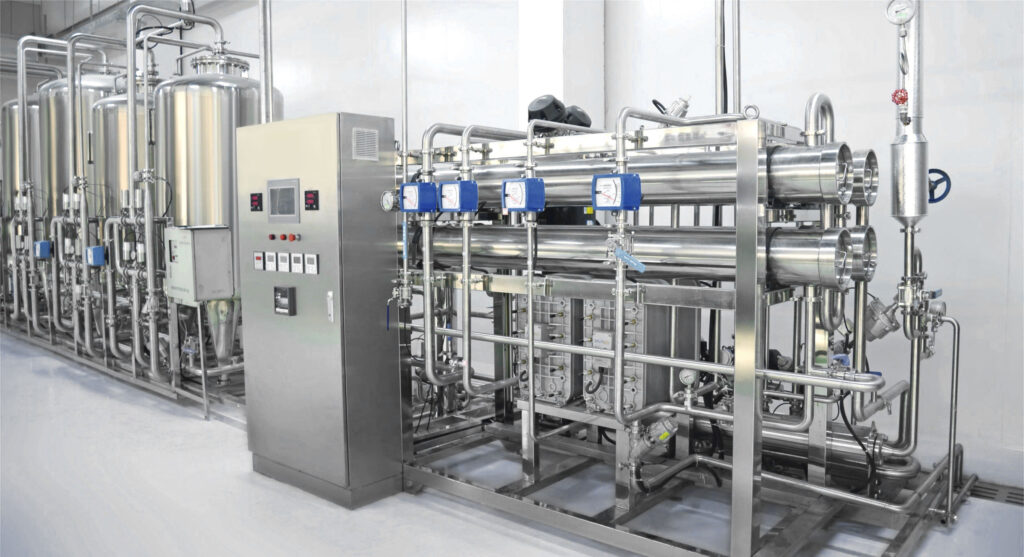
Water for Injection (WFI) is a water quality standard defined by pharmacopeial groups worldwide. WFI is used for the most critical pharmaceutical products and applications including mandatory use for injectable drugs, hemofiltration, irrigation, in the production of some active pharmaceutical ingredients, implantable medical devices and other varied applications.
Water for Injection has been historically produced by distillation, as this was the only acceptable treatment process in the past. As advances in reverse osmosis, electrodeionization, and ultrafiltration occurred over the years, and manufacturers gained experience using membrane technology to produce highly purified water, regulators re-evaluated which technologies were required for the production of WFI. The outcome was the 2017 harmonization of WFI regulations among the major Pharmacopeias, allowing the use of membrane-based alternatives for WFI production.
Critical Quality Attributes:
| USP | Ph Eur. | JP | |
|---|---|---|---|
| Conductivity | <1.3 uS/cm at 25° C | <1.3 uS/cm at 25° C | <1.3 uS/cm at 25° C |
| Total Organic Carbon | <500 ppb | <0.5 mg/L | <0.5 mg/L |
| Bacteria | <10 CFU/100ml | <10 CFU/100ml | <10 CFU/100ml |
| Endotoxin | <0.25 IU/ml | <0.25 IU/ml | <0.25 IU/ml |
Note: conductivity values reported are one value from a table of equivalent acceptable conductivity/temperature points